Pixels, Petticoats, and Play Buttons: The Women Streaming Retro Games Into the Future
There's something quietly revolutionary happening in the corners of Twitch that the algorithm doesn't always spotlight. Women — armed with vintage aesthetics, genuine passion for classic games, and a willingness to go deep on gaming history — are carving out dedicated communities around retro content. We're talking Pac-Man, Donkey Kong, Sonic the Hedgehog, Street Fighter II. Games that predate most of their viewers by a decade or two.
And honestly? The communities they're building feel like the best kind of dive bar — warm, specific, a little glamorous, and completely unpretentious.
Who's Actually Showing Up
The stereotype of the retro gaming enthusiast tends to skew pretty hard toward a specific demographic: guys in their late thirties who grew up with a Super Nintendo in the living room and strong opinions about the Sega-Nintendo console wars. That image isn't wrong exactly, but it's increasingly incomplete.
Female streamers specializing in retro content have been quietly building audiences that cut across age groups, gender lines, and gaming experience levels. Their viewers include nostalgic Gen Xers who want to relive the arcade era, curious Gen Z watchers who discovered vintage games through TikTok rabbit holes, and casual players who just want a low-stakes, personality-driven stream to wind down with after work.
What unites these audiences is less about what they grew up playing and more about the vibe — and the women running these channels understand that deeply.
The Aesthetic Is the Message
Here's where it gets interesting from a Pin-Up Games Club perspective: many of the most successful female retro streamers aren't just playing old games. They're curating an entire visual world around vintage aesthetics.
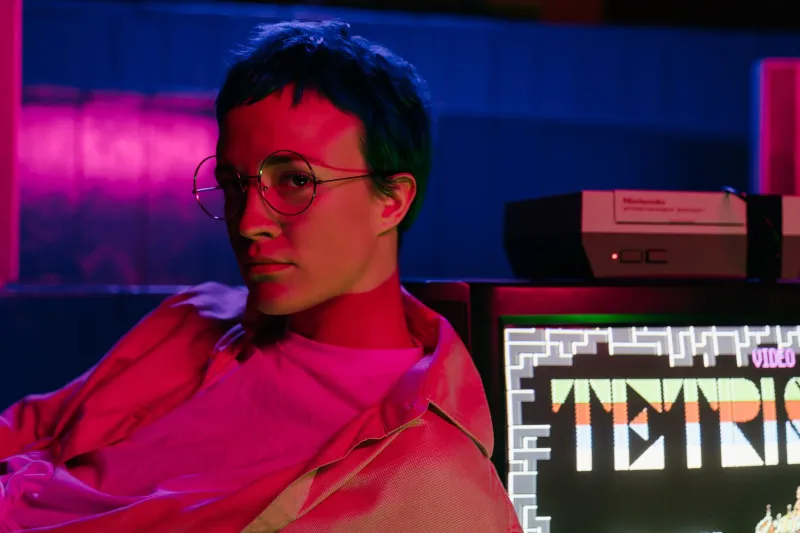
Think carefully dressed stream setups with neon lighting, vintage posters, retro cartridge collections arranged like art installations, and on-screen overlays that look like they were pulled straight from a 1950s pin-up calendar crossed with an 8-bit color palette. The aesthetic work is intentional. It signals something — that this isn't just a nostalgia trip, it's a whole sensibility.
That visual language borrows heavily from the same cultural moment that gave us classic pin-up art: bold colors, confident femininity, a certain playful glamour that doesn't take itself too seriously. It fits retro gaming like a glove, and these streamers know it.
Playing Games Nobody Else Is Playing
One of the most striking things about this corner of Twitch is the game selection. While mainstream streaming tends to cluster around whatever's trending on Steam or whatever battle royale is eating everyone's free time, retro-focused female creators are often diving into genuinely obscure territory.
We're talking deep cuts: forgotten NES platformers, arcade ports that never quite made it to home consoles, Japanese RPGs that got limited North American releases in the late '90s, even early PC games that most viewers have genuinely never heard of. Some streamers have built entire content series around playing through a specific console's complete library — every single game, in order, no skipping.
This specificity is a superpower. It attracts viewers who are really into this stuff, and it gives streamers genuine authority. When you've played three hundred Super Famicom games, you have opinions worth hearing.
The Challenges Are Real
Let's not romanticize this too much. The retro gaming space online still carries a gatekeeping culture that can be genuinely exhausting for women trying to establish themselves in it.
The credibility tests are relentless. Female streamers in this niche report being quizzed on obscure trivia mid-stream, having their knowledge publicly doubted in chat, and dealing with a persistent assumption that their interest in vintage aesthetics is decorative rather than substantive. The implication — that looking cute while playing old games means you don't really know old games — is both annoying and wrong.
There's also the discoverability problem. Twitch's recommendation systems tend to favor channels that are already large, which makes it genuinely hard for niche creators to break through. Retro content doesn't get the same algorithmic push as new releases, and female creators in this space often have to work twice as hard to get the same visibility as male counterparts with comparable audiences.
Despite all of that, the streamers building in this space are doing it anyway. Consistency, community engagement, and sheer love of the material are carrying them forward.
Community as the Real Product
Ask any of these streamers what they're most proud of and the answer is almost never a specific game they beat or a viral clip. It's the community.
Retro gaming streams tend to attract viewers who actually want to talk — about game design, about gaming history, about what made a particular soundtrack so memorable or why a specific level design was so brilliant. The chat culture in well-run retro streams can feel more like a conversation than a performance, and the women hosting these spaces are often exceptionally good at facilitating that.
Regular viewers show up not just to watch someone play Mega Man 2 but to be part of an ongoing conversation about why Mega Man 2 matters. That's a different kind of community than what forms around mainstream gaming content, and it tends to be stickier and more loyal as a result.
Some of these streamers have extended their communities beyond Twitch entirely — Discord servers, newsletters, vintage game swap events, even local meetups. The platform is a starting point, not the whole story.
What They're Actually Preserving
There's a preservation argument to be made here that doesn't get discussed enough. A significant chunk of gaming history is genuinely at risk of being forgotten — not because the games don't exist, but because nobody is actively introducing them to new audiences.
When a female streamer with ten thousand followers plays through a 1987 Famicom title that most of her viewers have never heard of, she's doing something that gaming historians and archivists genuinely care about: she's keeping that game in cultural circulation. She's giving it context, a personality, an audience that might go on to seek it out themselves.
The vintage pin-up aesthetic these creators often embrace reinforces this preservation instinct. It's a visual shorthand for this stuff matters, and it's worth celebrating — not as a museum piece behind glass, but as something alive and playable and fun right now.
The Future Looks Retro
The women building retro gaming communities on Twitch aren't waiting for mainstream recognition to validate what they're doing. They're already doing it — streaming obscure games, building loyal audiences, and dragging classic gaming culture forward into a present that desperately needs more of its warmth and personality.
For anyone who grew up loving these games, or who discovered them late and fell hard, these streamers are an absolute gift. They're proof that nostalgia doesn't have to be exclusive, and that the best thing you can do with a love of the past is share it with as many people as possible.
Find one. Subscribe. Say hi in chat. The community is better than you think.