Pixels on Your Back: How Retro Tech Imagery Took Over American Street Style
There's a girl in line at a Brooklyn coffee shop wearing a windbreaker covered in pixelated sprites. Behind her, a guy in Austin is rocking a tee shirt printed with a faded floppy disk graphic that reads SAVE BEFORE YOU QUIT. And somewhere in a Portland thrift store, a teenager is holding up a jacket lined with a circuit board print, completely unaware that the pattern was first popularized by a 1994 Radio Shack catalog.
Retro tech is having a moment in fashion — and it's not a quiet one.
The same cultural nostalgia that has people hunting down original Game Boys and cramming quarters into vintage arcade cabinets has officially spilled out of the rec room and onto the street. For anyone who's been paying attention to the broader retro revival — the kind we celebrate every day here at Pin-Up Games Club — this crossover makes complete sense. Vintage aesthetics have always had a way of sneaking back into the cultural conversation, and right now, they're dressed to impress.
From Utility to Identity
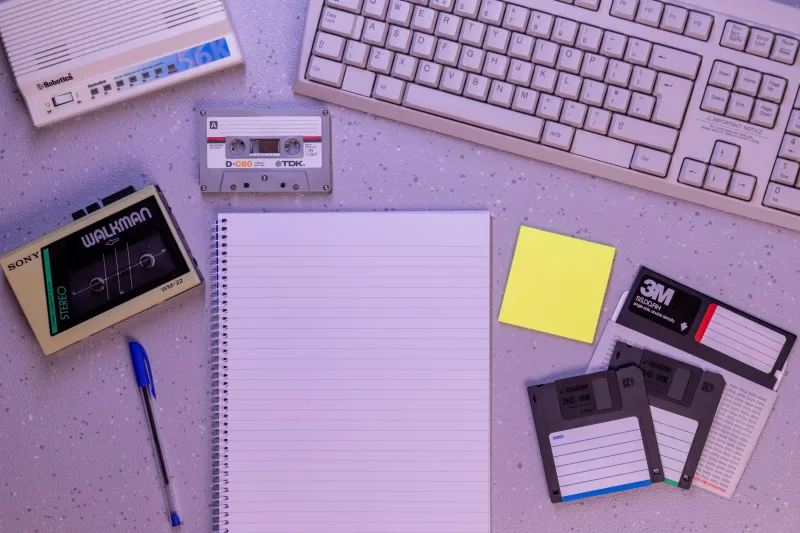
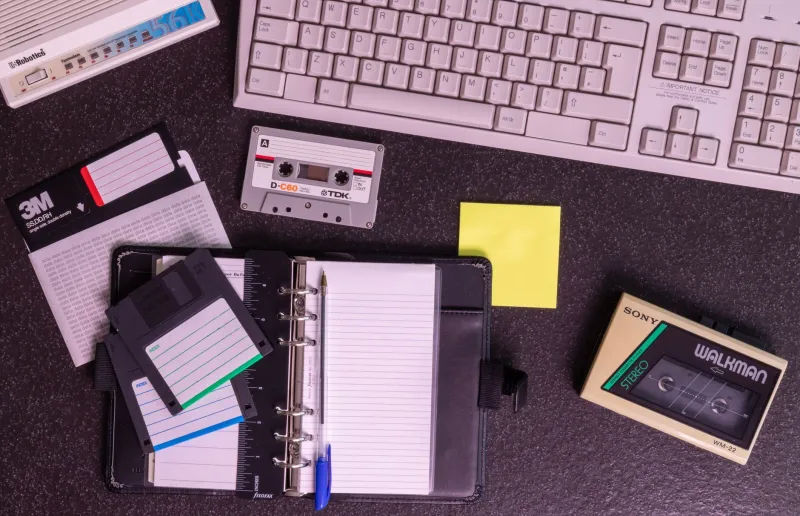
Back in the 1980s and early 90s, tech imagery was purely functional. A floppy disk was something you used to save your term paper. A cassette tape was how you recorded songs off the radio. A dot-matrix printout was just your mom's grocery list. Nobody was wearing these things.
But distance has a funny way of turning the mundane into the meaningful. The same generation that grew up watching their parents boot up DOS machines and rewind VHS tapes is now old enough to feel a sharp pang of nostalgia for that analog-digital in-between era — and young enough to still care about what they're wearing.
Millennials started it, mostly through ironic appreciation. But Gen Z picked it up and ran with it in a way that's anything but ironic. For a generation that never actually used a floppy disk, the imagery carries a different kind of weight. It's not nostalgia exactly — it's more like fascination with a world that feels simultaneously ancient and cool.
"There's something about the visual language of early computing that just hits different," says Dani Reyes, a Los Angeles-based streetwear designer whose brand, Byte Club, specializes in limited-run pieces featuring vintage tech graphics. "It's chunky, it's colorful, it's unapologetically bold. Everything modern tech design tries not to be."
She's not wrong. Contemporary tech aesthetics — think sleek white edges, minimalist icons, and matte aluminum — are deliberately invisible. The whole point is that you don't notice the design. Retro tech was the opposite. It announced itself. It had personality.
The Gaming Connection
It's no coincidence that the retro tech fashion wave crested at roughly the same time that vintage gaming exploded back into mainstream consciousness. The two trends are deeply intertwined, drawing from the same well of cultural memory.
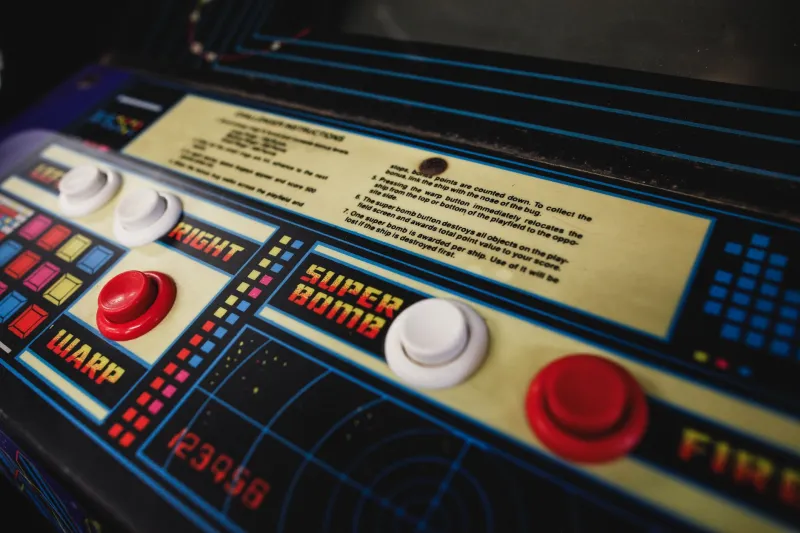
Game cartridges started showing up on jewelry. Pixel art migrated from indie game studios onto embroidered denim jackets. The color palettes of classic arcade screens — hot pink, electric blue, neon green — became the go-to choices for streetwear drops that sold out in minutes.
Brands like Vans, Levi's, and even Ralph Lauren have all dipped into the retro gaming aesthetic at various points in recent years, licensing classic game imagery or simply borrowing the visual vocabulary. Meanwhile, independent designers have built entire businesses around the intersection of gaming nostalgia and wearable art.
"Gaming culture gave retro tech fashion its backbone," says Marcus Tillman, a fashion historian and consultant based in Chicago. "The games were always the most emotionally resonant part of that era for a lot of people. The hardware just came along for the ride."
That emotional resonance is key. A cassette tape on a tee shirt isn't just a design choice — it's a signal. It tells the world something about who you are, what you value, and what kind of cultural touchstones shaped you.
Pin-Up Aesthetics and the Retro Tech Overlap
Here at Pin-Up Games Club, we've always believed that the golden age of gaming wasn't just about the games themselves. It was about an entire visual culture — the cabinet art, the magazine ads, the bold graphic design that made everything feel like an event. That same spirit is alive and well in the retro tech fashion movement.
The pin-up aesthetic, with its confident lines, saturated colors, and unapologetic glamour, shares a lot of DNA with early tech graphic design. Both were trying to sell a dream. Both leaned hard into visual impact. And both have aged into something that feels genuinely iconic rather than dated.
Some designers have made that connection explicit. Brooklyn-based label Voltage Vintage recently dropped a collection that blended classic pin-up illustration styles with vintage computer imagery — think retro bombshell figures posed against circuit board backgrounds, or classic 1950s silhouettes rendered in 8-bit pixel art. The collection sold out in under 48 hours.
"People are hungry for imagery that has warmth and personality," says the label's creative director, Jess Nakamura. "Old tech had that. Old pin-up art had that. Put them together and you've got something that feels both nostalgic and completely fresh."
How to Wear the Trend Without Looking Like a Costume
If you're thinking about dipping a toe into retro tech fashion, the good news is that it's a lot more versatile than it looks. The key is treating the graphic element as a focal point and keeping everything else relatively clean.
A floppy disk graphic tee works great with high-waisted straight-leg jeans and chunky sneakers — the kind of silhouette that echoes the era without going full costume. A circuit board print bomber jacket pairs surprisingly well with a simple black dress or tailored trousers. And pixel art accessories — pins, patches, embroidered hats — are an easy entry point if you want to test the waters.
Thrift stores are genuinely your best friend here. Actual vintage pieces from the 80s and 90s — old computer company promo shirts, tech conference swag, early gaming merchandise — carry an authenticity that no reproduction can match. They're also increasingly hard to find, which makes them all the more worth hunting for.
The Nostalgia Economy Keeps Winning
What's really driving all of this, underneath the aesthetics and the trend cycles, is something pretty simple: people want to feel connected to a past that seemed a little more tangible, a little more tactile, and maybe a little more fun.
Retro gaming gives people that feeling through play. Vintage pin-up art gives people that feeling through imagery. And retro tech fashion gives people that feeling through what they wear every day.
At Pin-Up Games Club, we think that's worth celebrating. The golden age of gaming and computing wasn't just a technological moment — it was a cultural one. And the fact that its visual legacy is still showing up on jackets, sneakers, and runways in 2024 says everything about how deeply it got under our collective skin.
Now if you'll excuse us, we need to track down a cassette tape enamel pin before they're all gone.