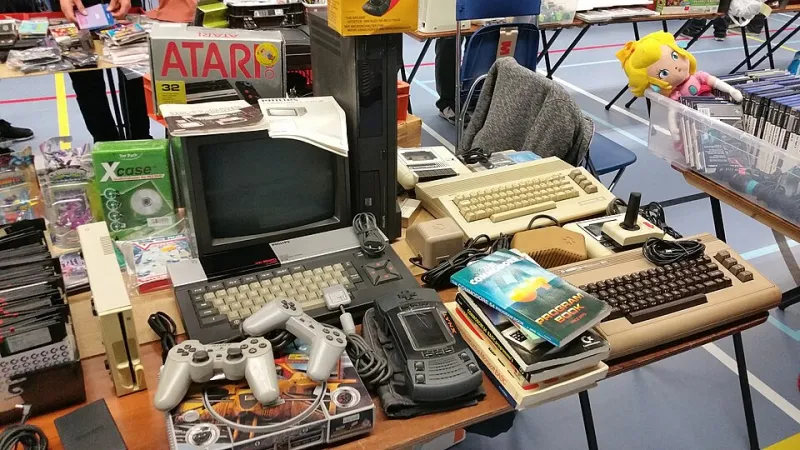
Busy Signals and Best Friends: The Strange, Beautiful World of Dial-Up Gaming
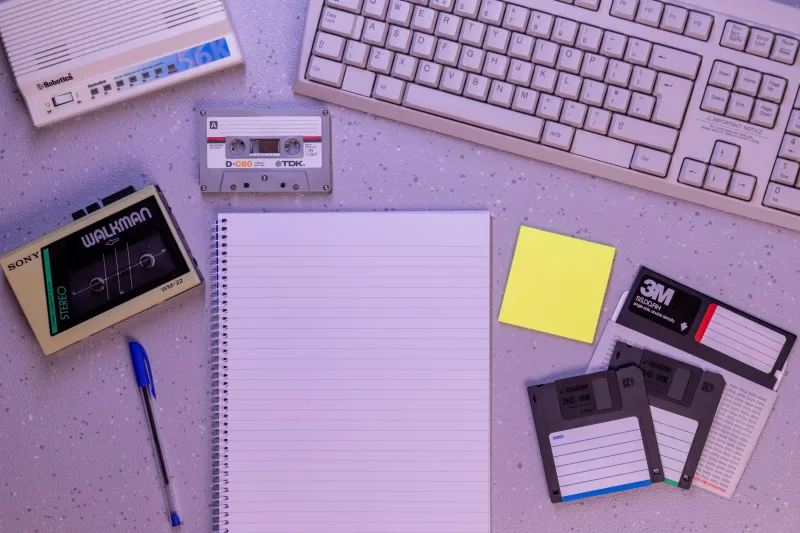
Close your eyes for a second. Picture a bedroom in 1994 — posters on the wall, a chunky beige computer humming in the corner, and a phone cord snaking across the carpet like it owned the place. Now imagine that glorious, ungodly sound: brrring-ksssh-eeeee-KKKRRRR-ping. That's the modem connecting. That's the sound of the internet opening up, one agonizing kilobit at a time.
For a generation of American gamers, that noise wasn't annoying. It was the starting pistol. It meant you were about to meet someone new, trade tips on a game nobody else at school had heard of, or finally get your hands on a shareware level that had been sitting on a BBS server three states away. Dial-up gaming was a whole lifestyle, and it deserves way more credit than it gets.
What Even Was a BBS, Anyway?
If you weren't there, bulletin board systems — BBSes — can be hard to explain. Picture a message board crossed with a file library crossed with a primitive chat room, all accessed by literally calling another person's computer with your modem. No browsers. No GUIs, usually. Just text on a screen and whatever ASCII art the sysop (that's system operator, the person running the whole thing out of their basement) felt like decorating the welcome screen with.
BBSes popped up all over the country through the late '70s and absolutely exploded in the '80s and early '90s. By some estimates, there were tens of thousands of them active in the US at peak BBS culture. Gaming was a huge part of what kept them alive. You'd log on to download shareware episodes of Doom or Commander Keen, swap high scores, argue about which games were worth the download time, and play door games — simple text-based RPGs and strategy titles that ran directly on the BBS server itself.
Legend of the Red Dragon. Trade Wars 2002. Usurper. If those names make your pulse jump even a little, you know exactly what we're talking about.
The Lag Was Real, and So Was the Love
Here's the thing nobody tells you about early online multiplayer: it was bad in ways that modern gaming simply doesn't have vocabulary for. A 14.4k modem connection was considered fast. A 28.8k was luxury. And if someone else in the house picked up the phone — game over, literally. The connection dropped, the session ended, and you had to start the whole dial-in process again.
And yet. People built genuine, lasting friendships through those connections. There's something almost counterintuitive about it — the worse the technology, the more effort people put into the communication. When downloading a single file took forty-five minutes, you weren't going anywhere. You stayed. You chatted. You got to know the other people on the board.
Susan M., a gamer from suburban Ohio who started using BBSes in 1991, remembers it this way: "You'd be waiting for something to download and just... talk. For hours. About games, about life, about whatever. I met people on those boards who I'm still friends with today. Actual real-life friends. That would sound insane to explain to someone who grew up with broadband."
That's not nostalgia distorting the memory. Early online gaming communities were genuinely tight-knit partly because the barrier to entry was so high. You had to want it. You had to be patient. And patience, it turns out, has a way of filtering for people who are actually worth knowing.
ASCII Art and Digital Glamour
We'd be doing this site a disservice if we didn't pause to appreciate the visual culture of BBS gaming — because it had one, and it was wild. ASCII art was everywhere. Sysops would spend hours crafting elaborate welcome screens using nothing but keyboard characters, building pin-up silhouettes, elaborate logos, and scene-setting graphics out of slashes, pipes, and asterisks.
There's something genuinely charming about that aesthetic in retrospect. It's lo-fi in the most extreme sense, but it had personality. Every BBS had its own visual identity assembled from the same 128 characters. The creativity involved in making something beautiful out of such limited tools is honestly kind of inspiring — not unlike the early arcade cabinet artists who made iconic imagery work within the constraints of a handful of screen pixels.
ANSI art took things even further, adding color and more graphic flexibility, and entire crews of artists competed to create the most impressive boards and title screens. It was a subculture within a subculture, and it fed directly into the demo scene and early game art communities that would shape digital aesthetics for decades.
When the Internet Went Commercial and Changed Everything
The mid-'90s brought AOL, and AOL brought the masses. Suddenly, getting online didn't require knowing what a baud rate was or having a sysop's personal phone number. That democratization was genuinely great for a lot of reasons — more players, more games, more everything.
But it also changed the texture of online gaming communities in ways that old-school BBS users still mourn. The intimacy thinned out. The signal-to-noise ratio dropped. When it costs nothing and requires no effort to show up somewhere, the people who show up are a much more mixed bag than the dedicated few who used to dial in at midnight because that's when the line was free.
Services like GEnie, CompuServe, and later early AOL gaming lobbies tried to bridge the gap — and for a while, they did. The Neverwinter Nights that ran on AOL in the early '90s (not to be confused with the later Bioware RPG) was one of the first real graphical MMORPGs in American gaming history, and it ran on dial-up connections that would make a modern gamer weep.
The Echo You Can Still Hear
Here's the argument worth making: modern gaming communities aren't so different from those early BBS circles. Discord servers have sysops (admins). Game-specific subreddits are basically message boards. The impulse to find your people, share what you know, and connect over something you love hasn't changed at all — we just do it faster and with better graphics now.
But speed costs something. The enforced slowness of dial-up created a kind of presence that's genuinely hard to replicate. When you were on a BBS, you were on a BBS. There was no multitasking, no second screen, no notification pulling your attention somewhere else. The connection demanded everything you had, and in return, it gave you something real.
There are still BBS systems running today — telnet-accessible, lovingly maintained by dedicated hobbyists who refuse to let the culture die. If you've never visited one, it's worth the ten minutes it takes to set up a telnet client. Log in. Read the old message threads. Look at the ASCII art someone spent three hours building in 1993.
It sounds like a modem handshake. It feels like coming home.
Feeling nostalgic? Dive into our Gaming History archives for more deep cuts from the eras that built the culture we love today.