Slow Connection, Strong Community: The Underground Web Spaces Keeping Retro Gaming Alive
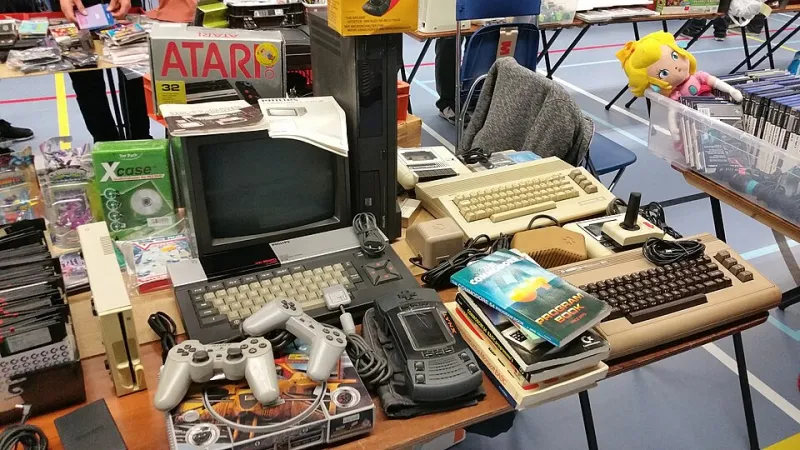
Photo: Someone Not Awful, CC BY-SA 4.0, via Wikimedia Commons
There's a certain kind of magic in stumbling onto a website that greets you with a tiled background, blinking text, and a visitor counter stuck somewhere around 47,832. It feels less like browsing the internet and more like finding an old love letter tucked inside a library book. For a growing number of retro gaming enthusiasts across the United States, that feeling isn't an accident — it's the whole point.
While the mainstream gaming conversation has migrated to TikTok feeds and Discord servers, a quieter, more deliberate crowd has been doing something unexpected: moving backward. Or rather, staying put.
The Web That Time Forgot (On Purpose)
GeoCities technically died in 2009 when Yahoo pulled the plug, but its spirit never really left. Sites like NeoCities — a modern hosting platform built explicitly to revive that hand-coded, chaotic, beautiful early-web aesthetic — have become home to dozens of retro gaming shrines. We're talking lovingly maintained fan pages dedicated to specific arcade titles, complete with animated GIFs, MIDI soundtracks, and guestbooks that people actually sign.
These aren't ironic exercises in bad taste. The creators behind them are often deeply knowledgeable historians who've chosen a presentation style that matches their subject matter. If you're preserving the legacy of a 1987 side-scroller, why would you wrap it in a sleek, algorithm-optimized content hub? The clunky aesthetic is the point.
"The design tells you something about the era," explains one NeoCities contributor who runs a site dedicated to early Konami arcade titles. "When everything looks like a corporate landing page, you lose the texture of what it actually felt like to be a gamer back then."
Forums That Never Died
Beyond the personal shrines, old-school message boards are quietly thriving. Platforms like Tapatalk-hosted forums, phpBB communities, and even a handful of Usenet groups that technically predate the World Wide Web are still active, still argumentative, and still the best places on the internet to find out why a specific Sega Genesis cart runs differently on a PAL console.
Sites like AtariAge, which launched in 1998 and still runs on forum software that would look familiar to anyone who was online during the Bush administration, maintain active daily post counts that would make a lot of modern gaming blogs envious. The threads are long. The debates are thorough. Nobody's trying to go viral.
What these spaces offer that mainstream social media simply can't replicate is depth. A Reddit thread lives for 48 hours before it's buried. A forum post from 2007 discussing the finer points of CRT monitor calibration for classic console gaming is still findable, still searchable, and still getting new replies in 2024. That's not a bug — that's the entire value proposition.
Pin-Up Pages and Pixel Passion
Here's where it gets really interesting for anyone who appreciates the intersection of vintage aesthetics and gaming culture. Several of these retro web communities have leaned hard into the visual language of mid-century America — the same bold colors, playful curves, and winking glamour that defined pin-up art and early arcade cabinet graphics alike.
One particularly beloved NeoCities hub, run by a collector in Ohio, pairs detailed write-ups on classic coin-op machines with original digital art in a classic pin-up style. The site looks like someone crossed a 1955 calendar with a 1985 arcade flyer, and the result is genuinely stunning. More importantly, it's attracted a community of contributors who share original artwork, scanned cabinet manuals, and restoration guides alongside the aesthetic content.
This kind of creative cross-pollination — where the visual history of gaming meets the broader pop culture of the eras that produced it — is exactly what you won't find on a corporate gaming platform. Nobody's optimizing for engagement metrics here. They're just building something they love.
Why Mainstream Platforms Can't Replace This
It's worth asking why anyone would choose a clunky forum over a polished Discord server, or a hand-coded webpage over a Squarespace site. The answers are more practical than you might expect.
Ownership is a big one. When a Discord server gets deleted or a subreddit gets banned, years of accumulated knowledge disappear overnight. Forum archives and personal websites — especially those backed up by projects like the Internet Archive's Wayback Machine — have a permanence that social platforms simply don't offer. The folks who've been burned by platform shutdowns (RIP GameFAQs message boards in their prime, RIP Shockwave, RIP a hundred other gaming hubs) have learned that lesson the hard way.
There's also the signal-to-noise ratio. Modern social media rewards hot takes, controversy, and speed. Retro gaming forums reward patience, expertise, and detail. The person who spent three months reverse-engineering the sound chip on a particular arcade board isn't going to get traction on Twitter. On a dedicated forum? They're a legend.
The Keepers of the Digital Flame
The people running these spaces are worth celebrating. Many of them have been at it for decades, maintaining communities through server migrations, platform changes, and the general chaos of internet history. A lot of them are in their 40s and 50s now — people who were teenagers in arcades during gaming's golden age and have never stopped caring.
But younger contributors are showing up too. There's a genuine generational handoff happening in these spaces, with younger collectors and historians learning from the people who were actually there. It's mentorship through message boards, and it's keeping institutional knowledge alive in ways that no YouTube channel or podcast fully replicates.
Some of these communities have also started formal preservation projects — scanning original documentation, recording oral histories, and coordinating with museums and libraries to ensure that the physical artifacts of gaming's early decades don't simply rot in storage units. The work is unglamorous and largely unrecognized, but it matters enormously.
Come For the Nostalgia, Stay for the Knowledge
If you've never poked around the quieter corners of the retro gaming internet, consider this your invitation. Set aside an afternoon, let yourself get lost in a forum thread from 2011, sign a guestbook, maybe download a MIDI file of your favorite arcade theme. You might find that the slow web — the one that still loads in chunks and rewards patience — has exactly the kind of community you didn't know you were looking for.
The mainstream gaming internet is loud, fast, and relentlessly focused on what's new. These spaces are something rarer: they're focused on what's worth remembering. And in an era when everything feels disposable, that's not just nostalgic — it's genuinely radical.