Lovesick in 8-Bit: How Retro Games Broke Our Hearts With Just a Few Pixels
There's a specific kind of heartbreak that belongs exclusively to the 1990s gamer. It happened in the glow of a CRT monitor, usually late on a Friday night, when a character who was technically just a collection of colored squares said something so unexpectedly tender that you had to put the controller down for a second. No voice acting. No orchestral swell. Just a handful of words in a pixelated dialogue box — and somehow, it wrecked you.
Retro games didn't have the tools modern developers take for granted. They had tight memory limits, rudimentary animation, and sound chips that could only approximate emotion. And yet, titles from the 8-bit and 16-bit eras consistently delivered romantic storytelling that felt genuine, earned, and surprisingly complex. That's not nostalgia talking. That's craft.
The Constraint Was the Point
Here's the thing about working with limitations: they force economy. When you can't render a character's facial expression in high definition, you have to make every word count. Early game writers — many of whom were working without formal writing backgrounds, just instinct and deadline pressure — discovered that restraint could be devastatingly effective.
Think about the original Final Fantasy series, particularly Final Fantasy IV on the Super Nintendo. Cecil and Rosa's relationship wasn't spelled out in lengthy exposition. It was communicated through brief exchanges, the way one character would step in front of another during battle, the quiet visual language of two sprites standing close together on an overworld map. Players filled in the emotional gaps themselves, which made the investment feel personal. You weren't watching their love story. You were co-authoring it.
That participatory quality is something modern games, with their elaborate cutscenes and fully voiced romance arcs, often trade away in the pursuit of spectacle.
Chiptune as Emotional Architecture
You can't talk about retro romance without talking about the music. Composers like Nobuo Uematsu and Koji Kondo were essentially writing emotional shorthand — theme melodies that players would hear during pivotal moments and carry with them for decades.
The love theme from Final Fantasy IV, played on hardware that could barely approximate strings, remains one of the most emotionally loaded pieces of game music ever composed. It didn't need a full orchestra. The simplicity was part of the message. Something fragile and beautiful being communicated through the most modest means available.
That's a very specific kind of romanticism, and it maps neatly onto the pin-up era aesthetic that still resonates today — the idea that elegance doesn't require excess, that a red lip and a knowing glance can say more than a thousand words. Retro game romance operated on the same principle. Suggestion over statement. Implication over explanation.
The Games That Got It Right
Chrono Trigger is probably the gold standard here. Released in 1995, it gave players a love story that unfolded across multiple timelines, never forcing the issue, letting the relationship between Crono and Marle develop through shared adventure rather than scripted declaration. The game trusted players to feel the connection without being told to feel it. That trust is rare, even now.
EarthBound took a different approach — quieter, weirder, more melancholy. The relationship between Ness and Paula was never overtly romantic in the traditional sense, but there was something unmistakably tender in the way the game handled their bond. When Paula prays for help at the game's climax, calling out to everyone who ever cared about Ness, it lands with a weight that most modern RPGs would struggle to match with ten times the budget.
Even early arcade games played with romantic tension. The original Donkey Kong framed everything around a rescue narrative, sure, but there was genuine visual storytelling in the way Pauline was animated, the way the level design created a sense of desperate longing in every jump Mario took. It was melodrama rendered in four colors, and it worked.
What Modern Games Sometimes Miss
This isn't a screed against contemporary gaming — there are modern titles that handle romance beautifully. But there's a tendency in big-budget games to over-explain emotional content, to walk players through feelings rather than letting them arrive there organically.
When a game stops to tell you that a moment is significant, it loses something. The retro approach — showing you two character sprites standing side by side at sunset, letting a four-bar melody loop softly in the background — demanded that you bring yourself to the experience. Your imagination did the heavy lifting, and that made the emotion yours in a way that a fully rendered cinematic moment often isn't.
There's also something to be said for the pacing of older games. Romantic storylines developed slowly, woven into gameplay rather than delivered in discrete cutscene packages. You had to earn the emotional payoff by playing, by investing time, by caring about the world the characters inhabited. That slow burn created genuine attachment.
Why It Still Resonates
Walk into any retro gaming community — the Discord servers, the convention floors, the dedicated collectors trading cartridges like baseball cards — and you'll find people who can describe, in detail, the exact moment a classic game made them feel something romantic. Not because the graphics were impressive. Because the storytelling was honest.
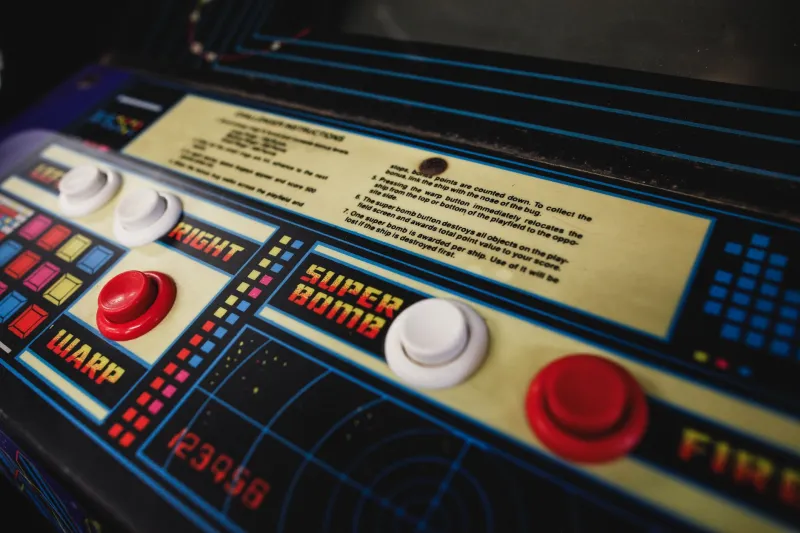
There's a reason the pin-up aesthetic and retro gaming culture overlap so naturally. Both are rooted in the idea that style and substance aren't opposites, that something created with limited resources and genuine intention can outlast anything built purely for spectacle. A hand-painted arcade cabinet from 1982 is still beautiful. A four-note love theme from a 16-bit RPG still makes people tear up at conventions.
The games that got romance right in the 8-bit and 16-bit eras understood something fundamental: emotion isn't a feature you add to a game. It's something that emerges from the space between what's shown and what's felt. The pixels were always just the invitation. The heartbreak was always yours.
And honestly? That's a pretty good definition of romance, vintage or otherwise.